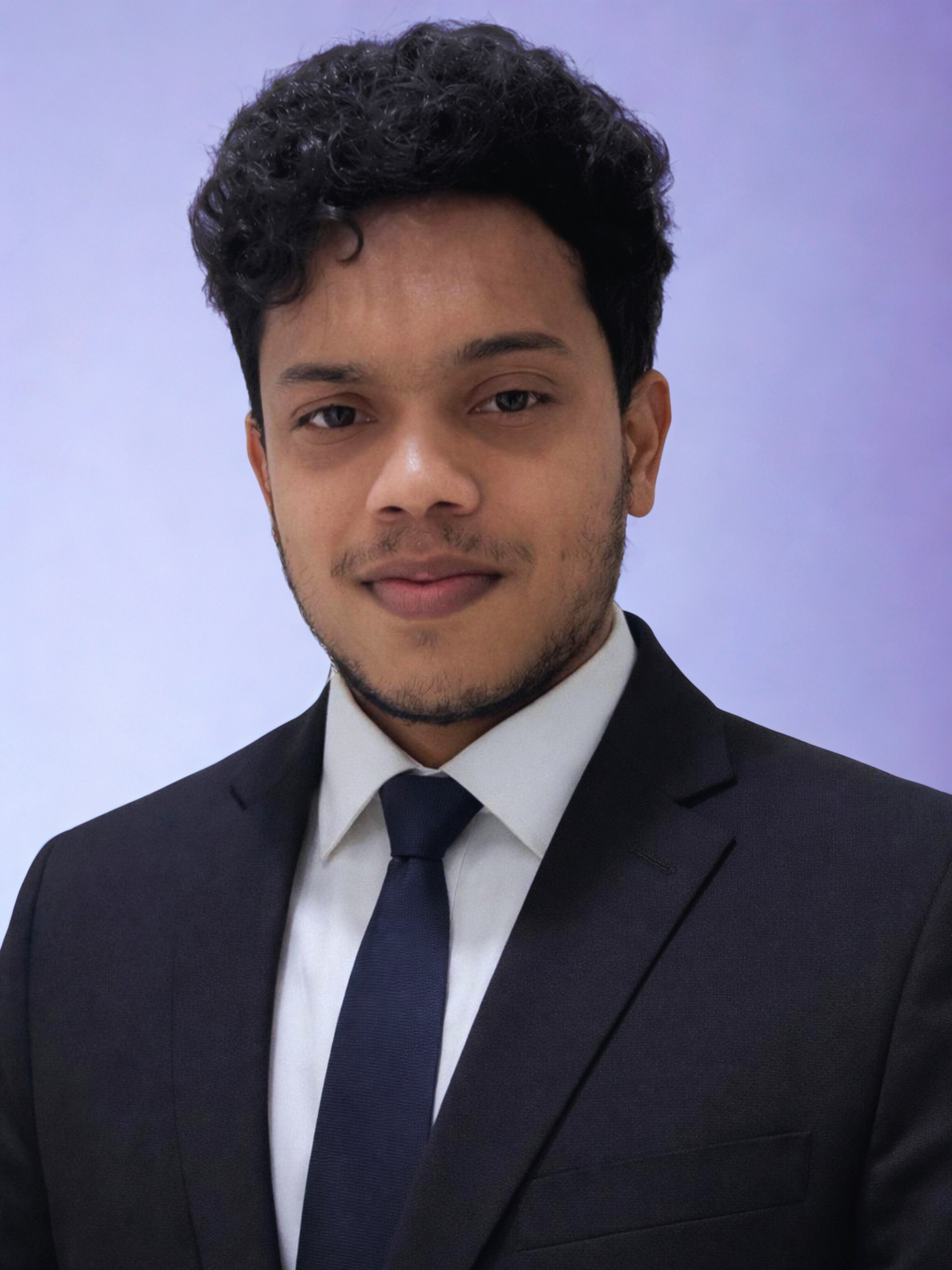
Hey, I'm Teja Potu
Applying AI to accelerate scientific discovery — building agentic systems that reason through STEM problems with LLM Agents, Claude, and Domain Tools
A bit about me
I'm a PhD student in Computer Science at Florida State University, working at the National High Magnetic Field Laboratory where I build LLM-powered agents that automate scientific analysis workflows — from mass spectrometry interpretation to molecular attribution. I use Claude and Claude Code daily in my research and development, and I'm focused on understanding how frontier models reason through experimental STEM problems.
I've published in Analytical Chemistry and MDPI Mathematics, won the MedGemma Impact Challenge (850+ teams), and I'm seeking opportunities to evaluate and extend AI capabilities for scientific discovery.
Areas of focus
My work sits at the intersection of agentic AI, scientific computing, and health — building systems that reason, act, and publish.
Published research
SCGclust: Single Cell Graph Clustering Using Graph Autoencoders Integrating SNVs and CNAs
T. Potu et al.
MDPI Mathematics, 2025
Internal Calibration without Internal Calibrants in FT-ICR Mass Spectrometry
R.P. Rodgers, C.L. Hendrickson, C.A. Holder Montenegro, A.J. Tello-Rodriguez, T. Potu, et al.
Analytical Chemistry, 2025
Recognition
Agentic Workflow Prize
WinnerMedGemma Impact Challenge
Won the Agentic Workflow Prize for CaseTwin — a clinical decision-support system that matches acute chest X-rays with historical "twins" and uses an agentic workflow to accelerate referrals, turning an hours-long manual retrieval process into a few minutes in rural hospitals.
Education & work
Ph.D. in Computer Science
Jan 2023 – Dec 2027 (Expected)Florida State University
GPA: 3.92
Research Assistant
May 2024 – PresentNational High Magnetic Field Laboratory
Built a novel BFS-propagation algorithm over mass-difference graphs for molecular formula assignment in FT-ICR mass spectrometry (97% accuracy, 10x faster). Designed a Claude-powered tool-calling agent that autonomously loads spectra, calibrates, tunes parameters, and generates diagnostic reports through natural-language interaction.
Graduate Teaching Assistant
Jan 2024 – May 2024Florida State University
Taught Coding Bootcamp and Introduction to Programming (Python).
Graduate Software Engineer
Aug 2021 – Dec 2022Meeami Technologies
Built speech AI products including noise suppression, echo cancellation, and super-resolution models optimized for edge inference on mobile and embedded devices.
Featured work
Published research, production systems, and open-source projects spanning graph ML, speech AI, deep learning, and AI agents.
CaseTwin
Collapses a 4-hour clinical referral workflow into ~5 minutes by automating historical case matching, specialist facility location, imaging comparison, and referral documentation. Features a medical image RAG pipeline and uses specialized AI models (MedGemma, MedSiglip) for chest X-ray analysis and clinical text processing.
Questory
A quest through knowledge using stories — a narrative-driven educational platform that delivers content through interactive storytelling. Built with a monorepo architecture spanning a TypeScript frontend and Python backend.
PyC2MC: Graph Attribution & Auto-Analysis
Graph-based molecular formula attribution engine for high-resolution mass spectrometry, paired with an LLM-orchestrated analysis layer that interprets spectral data end-to-end. Supports Claude, OpenAI, Gemini, and Ollama as reasoning backends.
MassBot
Jupyter-native conversational interface where researchers describe their data and a Claude-powered agent iteratively runs attribution, diagnoses error distributions, and adjusts parameters to optimize accuracy. Supports Anthropic, OpenAI, Gemini, and Ollama backends with multi-provider tool-calling.
SCGclust: Single-Cell Graph Clustering
Lead author on published research integrating SNVs and CNAs using graph autoencoders for robust single-cell clustering. Co-trains graph autoencoder with GCN and GMM for accurate cell subclonality characterization. Consistently outperforms SNV-only and CNA-only methods on simulated and real cancer samples.
More projects
Speech & Audio AI
Agentic AI
Data Science & ML
Computer Vision
Reinforcement Learning
Tools I work with
Languages
- Python
- C/C++
- Java
- TypeScript
- JavaScript
ML & Deep Learning
- PyTorch
- TensorFlow
- Hugging Face
- Scikit-learn
- GNN
- GANs
LLMs & Agents
- LangChain
- CrewAI
- RAG
- ChromaDB
- Qdrant
- Eval Design
Infrastructure
- Docker
- AWS
- GCP
- HPC / SLURM
- MLflow
- Git
Let's work together
I'm seeking opportunities to evaluate and extend AI capabilities for scientific discovery. Open to research collaborations and conversations about how LLM agents can accelerate STEM research.